
Are There Sea Otters in Maine?
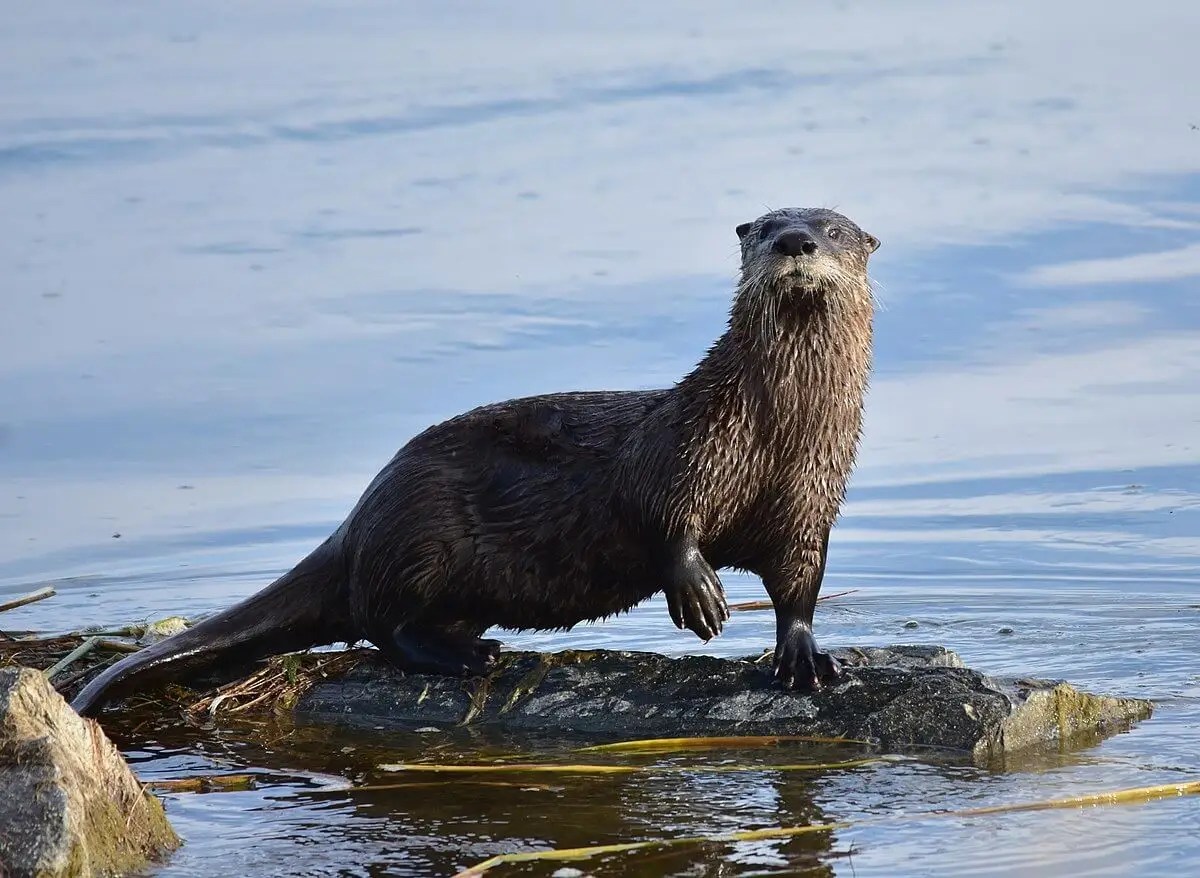
It’s a simple Maine wildlife question: Do sea otters live here?
No, the animal you spotted on the Maine coast while sea kayaking was not a sea otter. But there are otters in the sea in Maine! How’s that? We’ll explain.
First up, what are otters?
Otters members of the mustelid family, the same group of animals as weasels, ferrets, wolverines, and skunks. Unlike most mustelids, otters have adapted to aquatic life and can be found in lakes, rivers, and oceans. The thirteen different species of otters in the world today can be found on every continent except Australia and Antarctica.
So, what are sea otters?
Sea otters are not marine mammals like seals or sea lions. They are instead one species of otter, native to the coastlines of the northern Pacific Ocean, and not found in the Atlantic Ocean. During the height of the fur trade they were hunted nearly to extinction. Today they are recovering well, but are still threatened by issues like habitat loss and climate change.
Diet, Range & Behavior
Charismatic behaviors have made these little mustelids famous, like joining in large groups called rafts, and tying their babies to kelp to keep them from floating away. Their range extends from the coast of the Pacific Northwest into Alaska, then across the Bering Sea islands to eastern Russia and Japan. They typically feed on shellfish and sea urchins, which they crack open by smashing them between rocks and their own bellies.
Do any otters live in Maine?
Yes, Maine is home to the North American River Otter, which can broadly be found across the eastern US, the pacific northwest and northern Rockies, and most of Canada. Penobscot Nation knows them as kíwənikak. They are a famously playful animal, loving to slide on their bellies across any slippery surface, like mud, wet grass, and snow. When paddling through a salt marsh or river you can often spot their slides leading from the banks down to the water. Despite their name, river otters can be found in any variety of water bodies within their range, including the ocean! BUT, they’re still not sea otters.
So then, what’s a river otter?
River otters are a medium sized otter at three to four feet long, and weigh between 11 and 30lbs. River otters primarily eat fish, using their high swimming speeds to hunt, and will also enjoy: shellfish, amphibians, small rodents, baby waterfowl, and a variety of plants. They commonly live alone or in small family groups, and communicate primarily through endearing chirping and clicking noises, though they can also hiss and growl when they feel threatened. Otters are an important indicator species for conservation, as they are highly affected by water pollution, and feed on a number of keystone species such as salmon, river herring, freshwater mussels, and frogs.
Are there any other otter-like animals in Maine?
Kind of. The American Mink is another member of the Mustelid family which is adapted to life by the water. Much smaller than river otters, it’s between a weasel and a domestic ferret in size (about 1.5 to 2 feet long and 1-3lbs). Like river otters, they are a dark brown and have soft, water resistant fur. The indigenous Penobscot name for the mink is mósəpehso. Mink were another heavy target of the fur trade in North America, and today remain one of the most heavily fur farmed animals in the world. Mink eat a similar diet to their larger otter cousins, though with more terrestrial rodents, birds, and invertebrates.
Despite their small size they can take on impressively large prey, having been reported to successfully hunt targets as large as trout, seagulls, and cormorants. Mink will often kill their prey with a single, well aimed bite to the back of the neck. Though mink are excellent swimmers, people are most likely to see them when they are on land near water bodies. Here at Portland Paddle, we often see them scurrying along the seawall, where they hunt mice and crabs in the crevices between rocks.
And then there’s the Sea Mink…
Historically, northern New England and Maritime Canada were home to another species of mink, called the Sea Mink. Sea mink were roughly two to three feet long, and were adapted to an almost exclusively marine environment, frequently hunting in intertidal zones, eelgrass beds, and on remote islands. Their diet consisted of high numbers of shellfish, birds, and their eggs. The sea mink was sadly driven extinct in the 1800s due to the fur trade. Today we only know it from a handful of definitively identified bones, possible pelts, and from the accounts of fur trappers and indigenous peoples.
Some fun otter facts:
- All otters’ feet are webbed, allowing for their excellent speed and maneuverability in the water.
- Many otter species’ tails are shaped like rudders (like you may have used on a tandem sea kayak), helping them to make quick turns underwater.
- The heaviest otter species is the sea otter, which can weigh up to 100lbs! Despite being one of the heaviest mustelids, they are also one of the smallest marine mammals. Unlike seals or whales, who keep warm in the ocean due to fatty blubber reserves, sea otters rely on specialized fur.
- Otters appear in many stories from across the Wabanaki nations. In a series of Miqmac tales, Otter and Rabbit play a series of tricks on each other and the people, before eventually working together to stop a famine. In another, an evil medoulin, a sort of shaman or sorcerer, is tricked into losing his powers due to killing a white otter.
- The longest otter species is the Giant River Otter, which can grow to nearly six feet long. They live in the Amazon rainforest and neighboring parts of South America, and live in tight knit family groups, which often work together to hunt prey!
- The smallest otter species is the Asian Small-clawed otter which weighs about 7 lbs and is about three feet in length, still larger than the American mink.
- Though many otters can spend time in marine environments, only two are specially adapted to the ocean. The second species is the South American Marine Otter, which rivals the small-clawed otter for smallest otter species. These diminutive little guys live on the west coast of South America, and spend most of their time in rocky coastal environments. They are called the “gato marino” (marine cat) in Spanish.
River Otters vs. Sea Otters vs. American Mink
Feature |
North American River Otter |
Sea Otter |
American Mink |
|---|---|---|---|
| Found in Maine? | Yes—common in rivers, lakes, marshes, and coastal waters | No—Pacific Ocean only | Yes—near water bodies statewide |
| Size | 3-4 feet long | 3-4 feet long | 1.5-2 feet long |
| Weight | 11-30 lbs | Up to 100 lbs | 1-3 lbs |
| Primary Habitat | Freshwater and coastal waters | Ocean (kelp forests) | Freshwater, coastal areas, terrestrial |
| Main Diet | Fish, shellfish, amphibians | Sea urchins, shellfish (cracked with rocks) | Fish, rodents, birds, invertebrates |
| Social Behavior | Alone or small family groups | Large groups called “rafts” | Solitary |
| Penobscot Name | kíwənikak | — | mósəpehso |
| Signature Behavior | Sliding on bellies down muddy banks | Floating on backs, using tools | Hunting along shorelines and seawalls |
| Conservation Status | Stable and recovering | Recovering from near-extinction | Stable (heavily fur-farmed) |
Photo credit: Tom Koerner/USFWS
.jpg)